
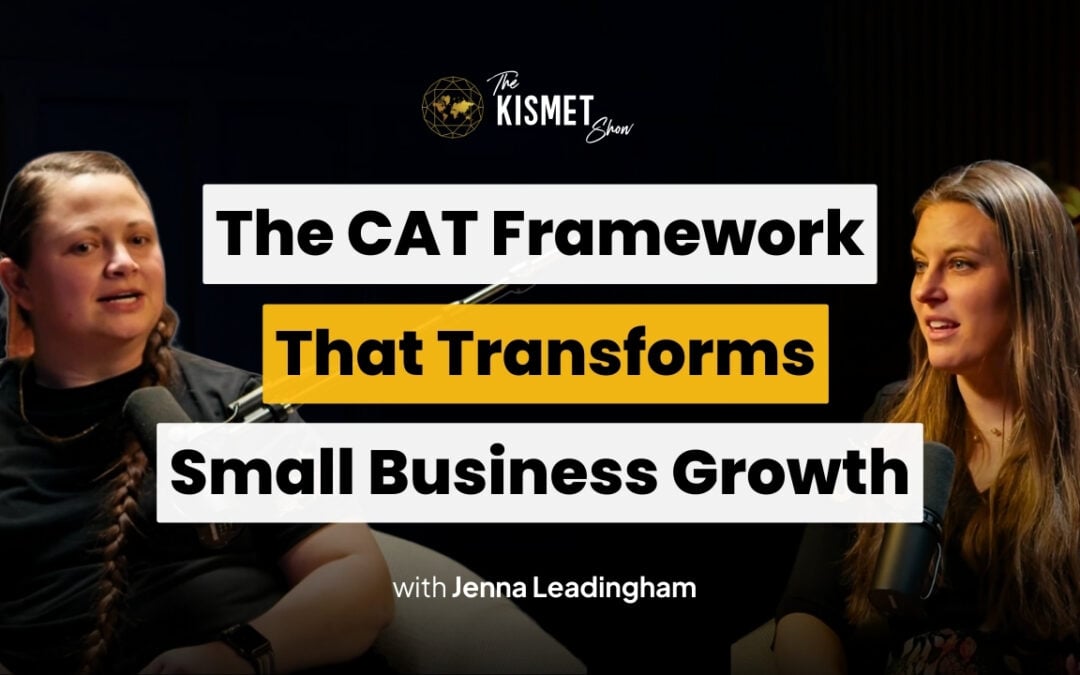
After recording this episode of The Kismet Show with Jenna Leadingham, I kept thinking about how often marketing automation for small businesses gets framed as something overwhelming or overly technical. In reality, the conversation kept coming back to simplicity, foundations, and confidence built through action. Not shiny tactics. Not perfection. Just real systems that support real businesses.
Jenna is the founder of LeadJenn Marketing and LeadJenn Automations, and she has spent over a decade in digital marketing, much of that time learning in real time while supporting family-run businesses. Her perspective is grounded, practical, and especially valuable for service providers, designers, and agency owners who want to grow without disconnecting from the people they serve.
If you want to watch the full conversation, you can find the episode here.
How Jenna Found Her Way Into Marketing Automation for Small Businesses
Jenna did not start her career chasing the latest tools or trends. She grew up in the construction industry and later found herself handling marketing for a roofing company and a family-owned window and home decor business. When those businesses became hers to help lead, she had to figure things out quickly, from local listings and reviews to sales processes and internal communication.
That experience shaped how she approaches marketing automation for small businesses today. Instead of forcing complicated systems too early, she focused on visibility, trust, and alignment between sales and marketing teams. Over time, that naturally led her to platforms like HighLevel, where she could consolidate tools, create clearer workflows, and build systems that actually got used.
Why Foundations Matter More Than Features
One of the strongest themes in our conversation was the importance of foundations. Jenna made it clear that marketing automation for small businesses only works when the basics are in place. A functioning website. Accurate business listings. A clear way for customers to leave reviews and get responses.
Automation does not fix broken foundations. It amplifies what is already there. When businesses skip those early steps, they often end up frustrated, blaming the tools instead of the setup. Jenna’s approach is to build the base first, then layer automation in a way that feels supportive instead of overwhelming.
Marketing Automation Is a Ladder, Not a Switch
Jenna described automation as something you climb into, not something you flip on overnight. Early wins often come from simple automations like review requests, missed call follow-ups, and conversational responses on websites. As businesses grow more comfortable, more advanced automation can follow naturally.
This mindset helps business owners feel confident instead of intimidated. It also allows marketing automation for small businesses to grow alongside the business, rather than forcing the business to adapt to the tech.
Confidence Comes From Reps, Not Perfection
Another point that resonated deeply was Jenna’s honesty around confidence. She did not come from a sales background. Her confidence grew through referrals, conversations, and repetition. The more she showed up, the more comfortable she became owning the role of a digital architect for other businesses.
This is especially relevant for designers and service providers who feel like they need everything perfectly dialed in before offering automation services. In reality, confidence usually follows action. Marketing automation for small businesses becomes easier to sell and deliver once you have real conversations and real use cases behind you.
Visibility Before Polish
We also talked about visibility and how many people get the order wrong. It is easy to believe you need the perfect website or brand before putting yourself out there. Jenna’s experience showed the opposite. Visibility creates opportunity. Polish can come later.
Whether through social media, Facebook groups, referrals, or simply picking up the phone, conversations are still the fastest way to grow. Marketing automation for small businesses works best when it supports those conversations instead of replacing them.
Custom Systems and Lifestyle-Aligned Growth
Jenna has intentionally kept her work consultative rather than fully productized. Every client gets a plan that fits their business, their stage, and their goals. That approach may not be the easiest path, but it allows her to serve well while maintaining a lifestyle that works for her family and priorities.
This part of the conversation is important because it reframes success. Marketing automation for small businesses does not have to mean building massive teams or chasing scale at all costs. It can mean creating recurring revenue, reducing tool overload, and giving business owners more time back.
A More Human Way Forward
What stood out most in this episode was how aligned Jenna’s approach is with what so many business owners are craving right now. Growth that feels intentional. Systems that make things easier, not heavier. Automation that supports relationships instead of replacing them.
Marketing automation for small businesses is not about doing everything. It is about doing the right things in the right order, with clarity and care.
If you want to watch the full episode with Jenna Leadingham, you can find it here.
YouTube episode: [Insert YouTube link]
If you do watch it, I would genuinely love to know what stood out for you.
