
The real estate industry is changing fast, and not in subtle ways. Clients are more informed, more overwhelmed, and more sensitive to how they are communicated with than ever before. They are not just choosing an agent based on listings or pricing anymore. They are choosing based on experience, consistency, and trust.
That shift is exactly why marketing systems for real estate matter so much right now.
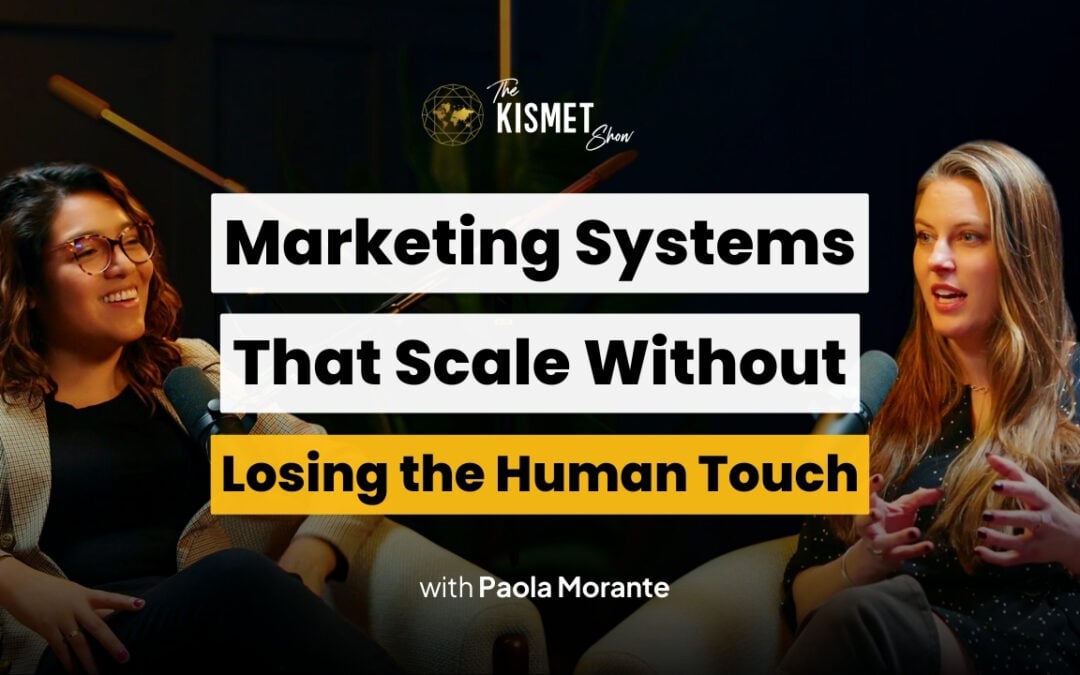
In this episode of *The Kismet Show*, I sat down with Paola Morante, a bilingual real estate agent serving Louisville, Kentucky and Southern Indiana. What stood out immediately in our conversation was how intentional she has been about building systems that support her clients without stripping away the human side of her work.
If you want to watch the full conversation, you can do that here. If you’d rather read through the ideas and reflect on how this applies to your own business, keep going.
Why One-Size-Fits-All Systems Fail in Real Estate
Most large brokerages offer prebuilt systems that look good on paper but fall apart in real life. They are generic by design, which means they rarely reflect the nuances of a specific market, language, or client demographic.
Paola shared how those default systems simply did not work for her audience. Her clients needed more personalization, more follow-up, and more clarity throughout the buying and selling process. Relying on mass emails and memory alone was not only ineffective, it was exhausting.
Marketing systems for real estate work best when they are built around how people actually move through decisions, not how software companies assume they should.
Automation as Support, Not Replacement
One of the biggest fears people have around automation is that it will make their business feel cold or impersonal. In reality, the opposite tends to happen when systems are built thoughtfully.
Paola described automation as another member of her team. It handles reminders, follow-ups, and education so she can show up where it matters most. The late-night phone calls. The emotional conversations. The moments when reassurance matters more than information.
Instead of replacing human connection, automation protects it by removing the mental load of remembering every detail.
Video and Communication at Scale
A major part of Paola’s system relies on video. Not polished, scripted content, but simple, direct communication that sounds like her and feels personal, even when it is automated.
This is where marketing systems for real estate become powerful. Video allows agents to deliver the same clarity and reassurance repeatedly without burning themselves out. Clients feel seen and supported, even when the agent is not physically present in that moment.
Done correctly, video creates continuity and trust across long timelines, especially in an industry where people may only buy or sell once every several years.
Systems Create Space for Boundaries and Growth
Our conversation moved beyond tools and into lifestyle, which is where systems really earn their keep. Without structure, growth usually comes at the expense of personal time, health, or relationships.
Paola talked openly about boundaries, travel, and personal development. Her systems allow her business to function without demanding her attention at all hours. That space is not a luxury. It is what makes long-term consistency possible.
Marketing systems for real estate are not just about scaling revenue. They are about building a business that does not collapse the moment you step away.
What This Means for Service Providers and Business Owners
Even if you are not a realtor, the principles here apply. Any service-based business that relies on trust, communication, and long decision cycles can benefit from systems that support people instead of overwhelming them.
The takeaway from this episode is simple. Start with what you already do manually. Identify where clarity breaks down. Build systems that enhance the relationship, not replace it.
That is how real growth happens, quietly and sustainably.
If this conversation resonated with you, I encourage you to watch the full episode and think about where better systems could support your work and your life at the same time.
